【時報訊】深入四川汶川,實地採訪四川地震後重建請形之Ohio州Dayton大學新聞系四年級學生 Matt Loupee在第二篇報導中,以一個外籍記者眼光體驗出震災後現代中國的透明度,Loupee表示,在中國採訪地震重建及訪問災民仍然受到若干限制,災民反應也可能有所保留,他指出,透明的中國及自由流通的資訊將有助於災難後之重建,及改善中國政府之形象。
在四川汶川進行訪問攝影,Matt Loupee雖曾遭軍警盤查詢問,但是他熱誠的工作態度得到回報,將汶川地區各項重建工作與災區民眾及兒童生活現況,以文字和相片生動的傳回聖路易時報向美國及世界報導。
「四川汶川走向重建」系列報導將在聖路易時報英文版及時報網站 http://www.scanews.com發表。
Transparency in Modern China
Matt Loupee
Since the May 12th earthquake, China has seen an invasion of international media. The government response to this international media pressure has shown how much the People's Republic of China has moved towards transparency. In many cases, China seems to be much more open in revealing information to the international community, but extreme government control can still be seen in certain areas.
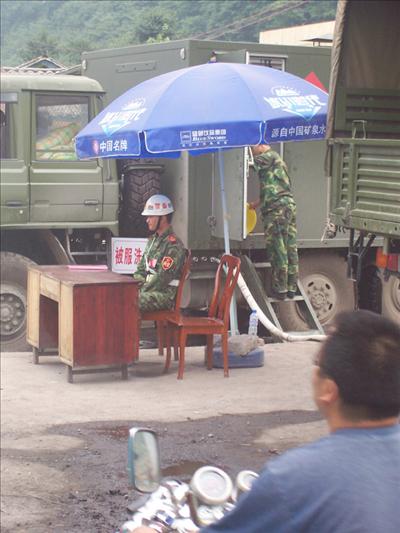
The Destruction of so many homes and villages has brought about the temporary relocation of millions of Chinese to tent cities. Row after row of blue tents can be seen with armed guards standing at entrances to the cities. The limited access to these tent cities given to the international community arouse suspicion on what the Chinese government do not want its people to reveal. The upcoming Beijing 2008 Olympic Games may be the largest factor in the government's desire to give the international community a positive image of its handling of the earthquake disaster. This positive image can be created by the manipulation of facts, figures, and control over the flow of information leaving Sichuan Province.
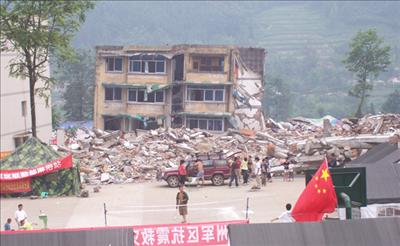
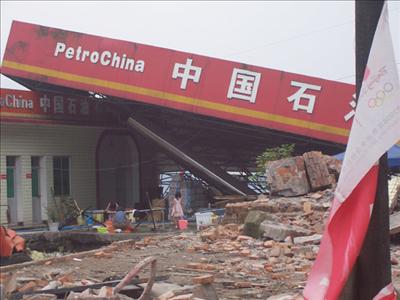
When attempting to interview individuals about their experiences with the earthquake and recovery process, I first tried to gain access to a large tent city in a town devastated by the earthquake just outside of Chengdu. I walked through the surrounding town in which no building was left unharmed. Many buildings had been completely leveled by the earthquake and rubble was piled on every street. Accessing the tent city inside this town proved impossible as the armed guards would not allow me to cross the necessary bridge. I raised a camera to photograph the tents from across the bridge when shouting erupted and I was told to leave. Walking down the street, I was approached by an officer who asked for my passport and visa. He radioed my information around the city before a van with flashing lights approached. Officers piled out and six uniformed police surrounded me in a semi-circle. I was told to immediately leave the area and was escorted by multiple police riding motorcycles to the nearest bus out of the city. Not only the denied access but the fervor with which the Chinese police wanted me to leave the area begs one to question what information the residents of this tent city may hold. Perhaps the Chinese government only hopes to quiet these people until international interest in the Sichuan earthquake has died down.
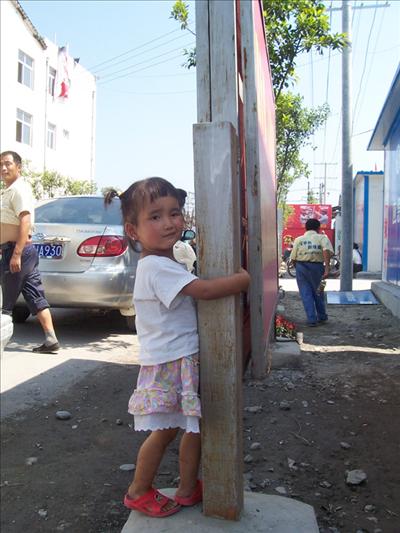
The earthquake caused many living near Ji Guan Mountain to relocate to another large tent city. Accessing this tent city proved easier as I was able to walk straight through the gates and study the streets. A group of three children were watching television inside their tiny one room temporary housing facility when I began speaking with them. They were relocated from the mountainside to their tent city by the Chinese military following the earthquake. The government now rations just over 1 pound of rice and 10 Chinese yuan per day, or about $1.50. Their former school has become home to many other people made homeless by the devastating earthquake. After less than 10 minutes with these children, a man and woman working the tent city told me to go with them. I asked if there was a problem, but was told there was "no problem." Clearly, I was the problem and was not allowed to speak with the children. I was taken to their office in the tent city where I expected to gather further information. I was not allowed to speak with any of the tent city residents, ask questions of those working at the tent city, or photograph their office. The number of individuals residing in the tent city and other basic information would not even be revealed to me. Without the possibility of gathering more information, I photographed the general area and left the tent city as they clearly hoped I would. On my way out the woman questioned what had made me come to this place, to which I replied I was just traveling and passing through. Even while exiting, they were wary of my presence and my motives.
Events like this happened repeatedly and displayed the strong control the Chinese government still has on both its people and the flow of information. Rumors circulate that victims of the May 12th earthquake have been coached by the government how to respond to media questions. There is also widespread belief that the numbers of dead and injured have been distorted by the government to protect the event from too much negative world focus. Although there is no concrete evidence to support the distortion of figures involving victims, this would fall under China's tradition of information control. Even those who want the world to know the devastation that has occurred in Sichuan Province fear government retaliation for discussing the event with outsiders, particularly journalists. This lack of transparency only harms the Chinese people who need help the most. The free flow of information could work to serve the Chinese people and cast a spotlight on Sichuan Province for the world to see. However, the Chinese government casts its own shadow over the earthquake disaster and chooses to promote a glowing image of government response rather than call to the international community for assistance and support.
|